
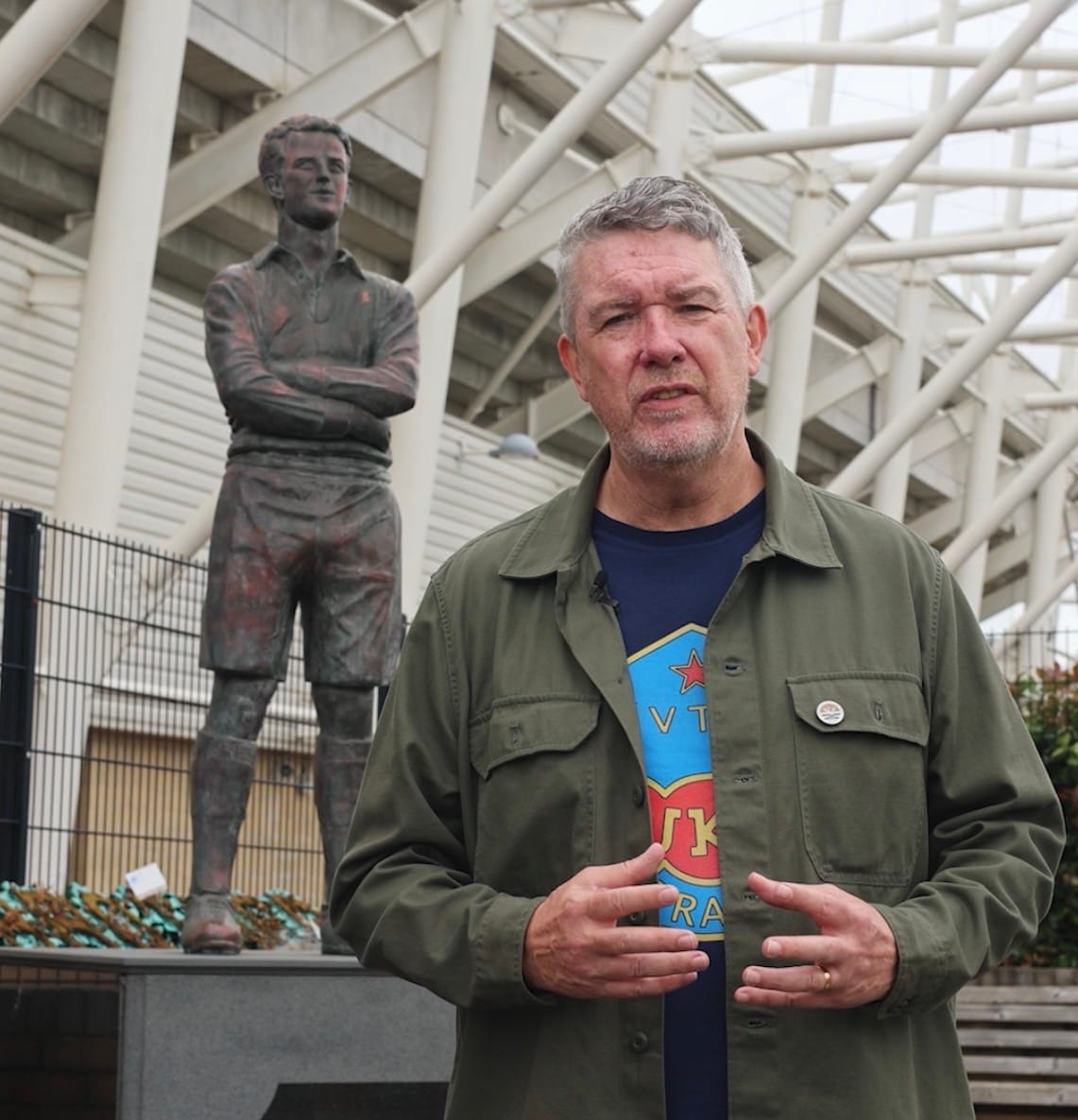
David Brayley is an award-winning author and sports writer from Swansea.
He has written two autobiographies of elite sportsmen, cricketer Tony Cottey and Wales international football captain, Ashley Williams, and two official books about Swansea City.
He is also an acclaimed author of children’s books having written a cycling novel, Champion of Champions, and a series of rugby books with Wales rugby legend, James Hook, called, Chasing a Rugby Dream. The first in the series, Impact, won the Telegraph Children’s Sports Book of the Year.
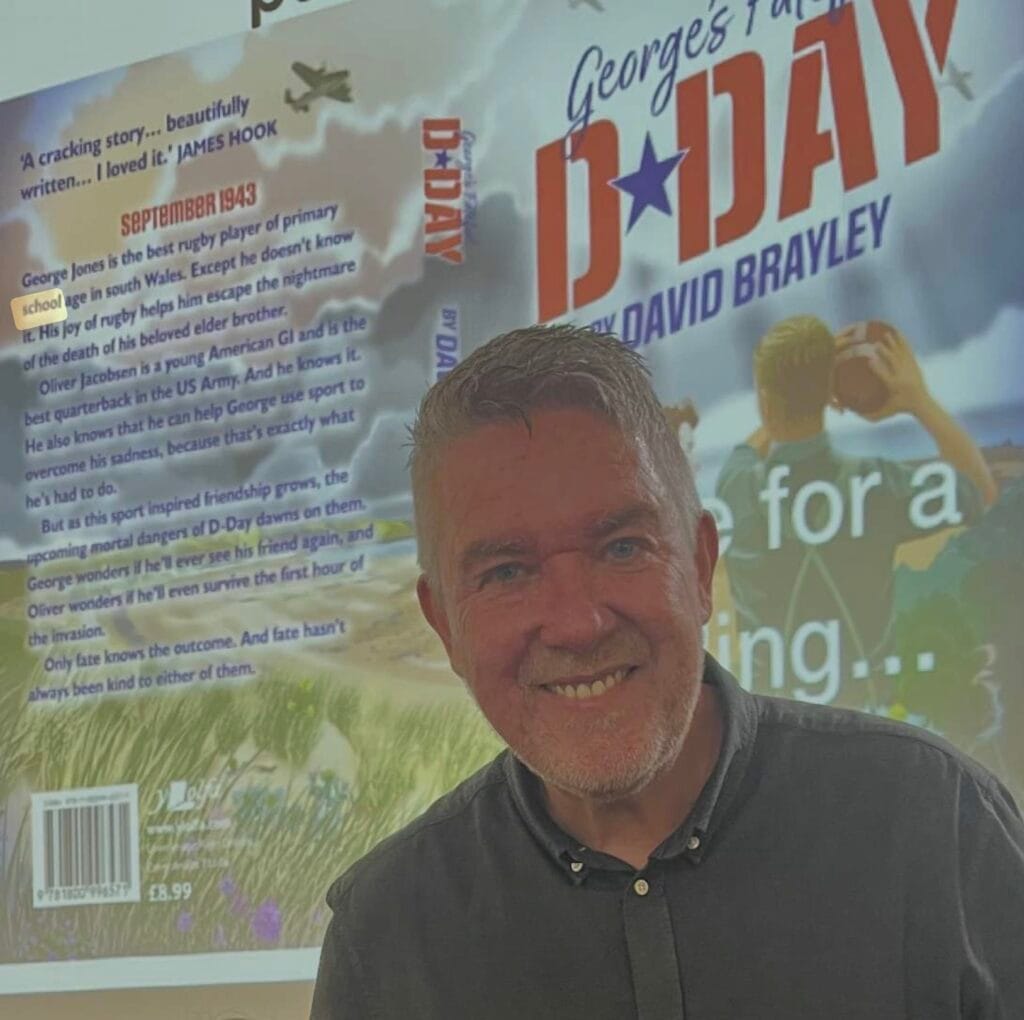
David’s latest book – set in Port Eynon – is called, George’s Fateful D-Day.
Dave also works closely with Ospreys in the Community on their Sporting Memories programme and is also an ambassador for the Swansea City Supporters Trust. Dave has made two films about the Golden Era of Swansea football in the 1950s – Wonderland, The Alice Street Story and Ivor Allchurch – Golden Days. Both are available to be watched for free on YouTube.
In this Take 5 Q&A, he tells us more
1. You debuted your football legends walk and talk at last year’s Gower Walking Festival. What can this year’s walkers expect?
When I made the films “Wonderland, The Alice Street Story” and “Ivor Allchurch – Golden Days”, I was fortunate to work with the families of footballers John and Mel Charles, Jackie Roberts, Ernie Jones, Mel Nurse and Ivor and Len Allchurch. Much of the detail of the childhoods of these great players and the links they have with the Cwmdu, Cwmbwrla, Manselton, Brynhyfryd and Plasmarl areas was told to me by the families but I wasn’t able to be put in the films. It’s these stories and tales, that I’ll be sharing on the walk at the relevant locations.
2. The subject matter fits neatly in Swansea’s vast sporting history, something you have delved into in depth in recent years. How special does it make Swansea in your opinion?
I’ve said it many times, if places like Newcastle, Liverpool or London had produced the same number of genuine world class footballers in a single decade – the 1950s – that Swansea did, then Hollywood would’ve come calling years ago. Producing players like the Charleses, the Allchurches, Terry Medwin, Cliff Jones, Jack Kelsey, Harry Grifiths, Trevor Ford, Ray Daniel, Des Palmer, Jackie Roberts, Mel Nurse, Barrie Jones and Ernie Jones – international footballers of significance, all, is an astonishing achievement for what was, then, a small provincial town. If you take similar places like Southampton or Bristol, they haven’t produced as many world class footballers in over 130 years of professional football – combined! – that Swansea did in just over a decade. Nationally, it’s one of the most untold stories in British football history. I’m incredibly proud to have been able to shine a light on these players through my films. Their story deserves to be heard.
3. Why is it important that we recognise the sterling deeds of the sporting community through history and up to the present day?
We live in a time of charged opinions and often aggressive, divisive points of view. Yet up and down the country, every Saturday afternoon, 20, 30, 40, 50,000 fans or more, gather at an arena and come together to support their football team. Politics are forgotten, disagreements are shelved, and for a couple of hours, these huge groups of people become one. It’s the only thing in our society that can bring us together like this…music is similar, but the passionate support for a team in a sporting battle is missing from that.
These players become our heroes, and some, like Ivor Allchurch and Mel Nurse of the past, and more recent players like Alan Curtis, Leon Britton and Lee Trundle become very important pillars of our community. If we forget the deeds of these players on the pitch, then we have no context on which to judge our current team and wearers of the Swans shirt. We have the makings of a good team now, but none have matched the achievements of the former players I mention. Knowing this allows the fans to support and dream, and the current players to try to emulate. The proud sporting heritage of Swansea provides a very powerful inspiration to all.
4. The wider Swansea area is also known for the magnificence of its scenery and there is no better way of seeing it than on foot. What is your walking background?
I was an active local sportsman until my mid 30’s when a back injury curtailed my on-field endeavours. I was asked to take part in one of the earliest MacMillan walks from Rhossili to Mumbles and the walking bug bit me straight away. Since then, there’s not many parts of Gower, Swansea and the Swansea valley that I’ve not trudged. I try to do a 10 to 12 mile walk at least once a week, and never get tired of Swansea Bay, Mumbles, Langland, Caswell, and the rest of the Gower. We are blessed with the most fantastic scenery in our area, and I’ll keep exploring it as long as my knees – and my back! – allows me to.
5. Finally, how pleased are you that you can give members of your festival walk the best of both worlds, sporting heritage and the chance to get out and about, with all the associated health benefits of walking?
It encapsulates everything in my life that I’m passionate about. Walking, for me, is hugely important to my well-being and general fitness. Being able to get out with a friend and just talk whilst enjoying our great city and beyond is the activity I enjoy most in life. Added to that, I’ve loved the history and heritage of Swansea sport in general, but Swansea City in particular, since I was a teenager, reading the books of David Farmer and the sadly, recently passed, Peter Stead. Their work instilled a love of local sporting history, and – whilst it’s a well-worn cliche – to be able to combine walking with that history on this walk, is a bit of a dream come true for me.
For further information about David, go to david-brayley.co.uk
For 2026, David is leading the following walks:
Following in the Footsteps of Swansea Football Legend on 11th September.